Showing posts with label Local Democracy. Show all posts

Tuesday, 3 June 2025

The Fragile Progress of Democracies and Bad Bedfellows

 The Fragile Progress of Democracies and Bad Bedfellows


It’s now almost a year since the Labour Party won the last election and the context in which it was won is in itself interesting: my view is rather than “Labour Sweeping to Victory,” it was the Conservatives that “Crashed to Defeat.” Either way, it felt pretty good at the time!


“If you want to make the gods laugh, show them your plans” (or similar), this sober reflection on the unpredictability of life came to horrific fruition when the brutal murders and assaults of Southport and the ensuing Civil Unrest, brought into sharp and stark focus, the dangerous currents that move beneath the surface of society; ones that are strong enough to pull us all out to an unforgivingly dangerous seas. And for every action, there is a reaction: the Government's response? Swift, decisive and divisive one it could be argued, that it contributed to further pressurising the fault lines and cracks in a series of already stressed society.


What's The Direction of Travel?
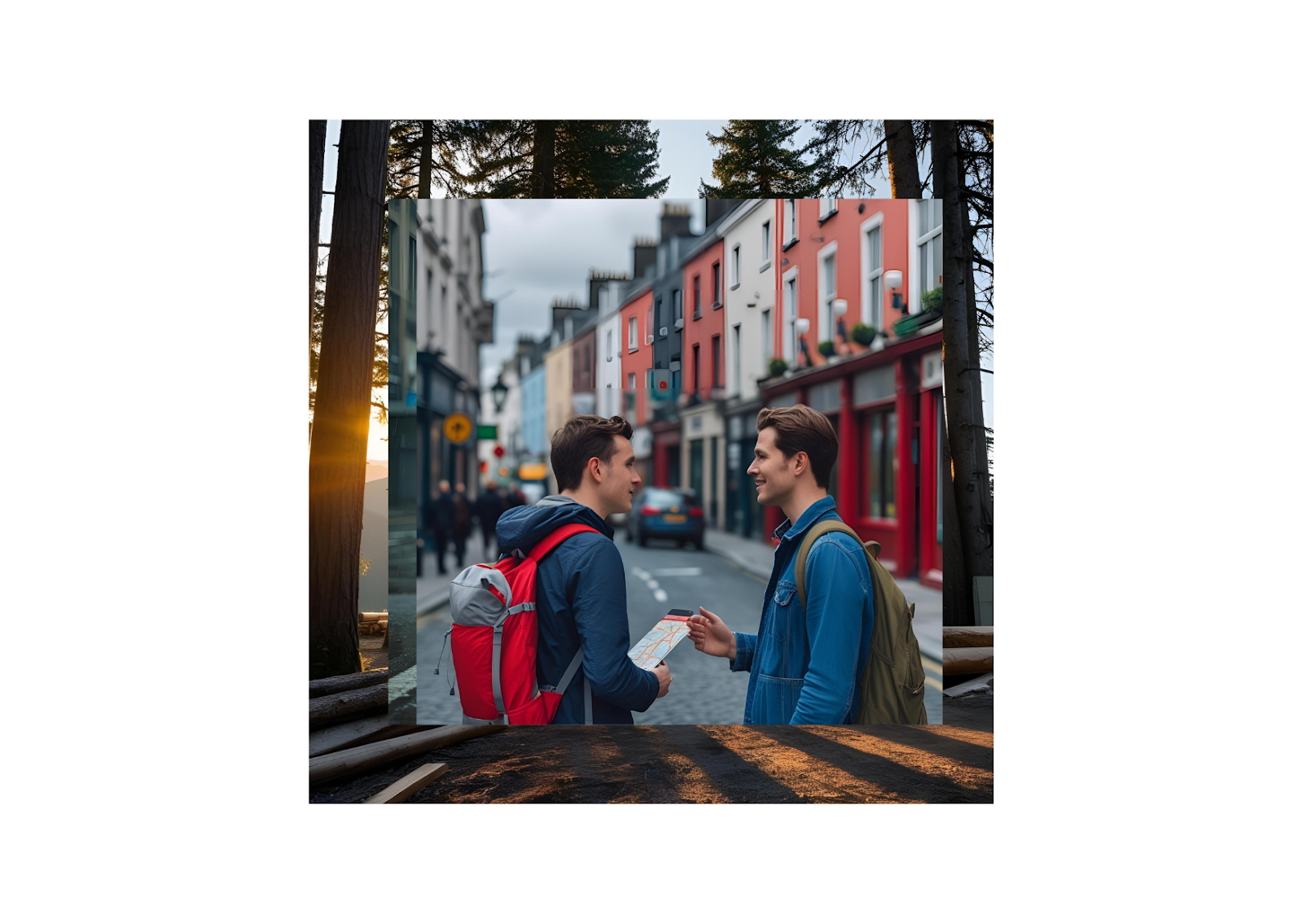

There’s an old line from Ireland: a traveller asks, “How do I get to Dublin?” and the reply is “Well, I wouldn’t start from here!”

But, we seldom have a choice do we? Lame as it sounds, the line “We are where we are,” has deep and important significance as we try hard to work out why the present is so difficult to understand, that the future is uncertain and it seems, determined to thwart our journey; you know, “It just shouldn’t be like this!”


So, why? Well, I’m not going back too far here, (honestly, I have a life!), but here we go. Since 2020, we’ve had: the Pandemic and Lockdown, and these combined, I feel, to expose some cruel social and economic fault lines that have (in some cases) been developing since the end of WW2. The Russian invasion of Ukraine together with its impacts on economies, supply chains and our general sense of safety and well-being, the increased impacts of Brexit, Liz Truss, strains on the NHS and Care Gazza. Add to this a toxic narrative that thrives and grows and multiplies in the petri-dish of informal immigration that contributes to to pre-existing cultural and religious hostilities and we have an increased potential to become more open to accepting of a narrative formed around this idea...


“The reason you’re doing so badly, is because they are doing so well”


Bad news is amplified, good news and fine intentions are mocked, the Nation is persuaded to see itself as weak and at the mercy of dangerous international conspirators and we are encouraged, by default, to be less kind to “all but our own.” I wonder where this has happened before?

And then there’s Donald Trump: I’m not sure what happened to the collective American psyche, however his presence on the world stage is truly Shakespearian, and in a not-good way. I’ll leave it there...for now at any rate


There was in 1987, the release of a six series sitcom called “Big Jim and The Figaro Club.” Set in the 1950’s, it revolves around the “relationship” between a group of builders and their foreman: a strong social metaphor in itself! The builders talk of,

 .'when we was going to build the new Jerusalem - you know, before the world turned lax and sour'.


 and the series was in my view, a delightful gift of high comedy combined with sharp social commentary and its voice is more important now then it was then, as our individual and collective worlds appear to have  turned “lax and sour.” Mistrust and cynicism appear, for now, to have won. Our world has indeed appeared to have turned "lax and sour!"
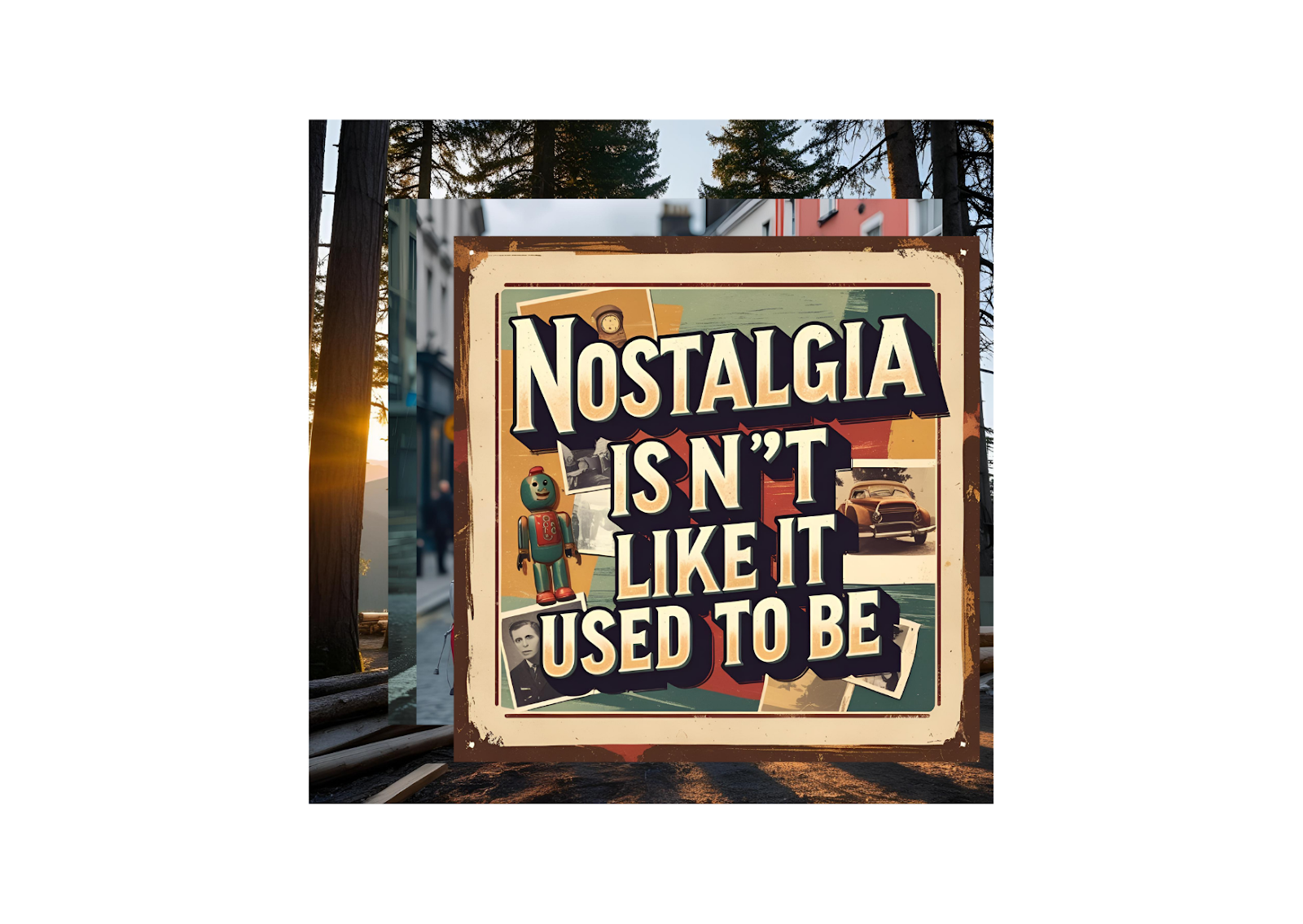


I follow a few “The Way We Were” type groups on Facebook. You might know this sort of thing, photos of towns and cities from not so long ago. Safe enough eh? Well, not really: nostalgia is manipulated through comments that refer to


 “Safer and happier times, when Britain was Britain”


And the explicit and implicit messages therein are a concern to me, mainly because this approach works and feeds not, “nostalgia” as we understand it, but rather a “toxic nostalgia,” one that leaves us open to misinformation and manipulation.


So, where to now?


We need to talk with each other, not at each other, and these conversations need to happen at a highly localised level. They need to create both tangible and “feel good” outcomes and will need to take place in venues other than formal structures within which there is an explicit or implicit political (or Political ) agenda. My emergent vision is one where political institutions, organisations and organisers are known for their ability to facilitate that which is good and needed at local, almost street levels. Given that I’ve cast some shade (getting down with the kids here-yeah, right!) on nostalgia, I want to take you back to the earlier days of the pandemic. It was at this point that people went out of their way to help each other: small acts of great significance made life better at a challenging time, the spirit of which was eventually diluted by greedy,corrupt liars, ones for whom the only standard was a double one: they were and still are the worst of bedfellows to fragile democracy. But we mustn’t forget what we can be, especially when we talk to each other a little more, care for each other a little more and in so doing, reinforce the ties that bind us together, much more.


Friday, 18 April 2014

First We Turn Away from Democracy, Then We Turn On Ourselves


The reportage and images from Wolverhampton City Council over the recent past have caused sadness, disbelief and in many cases anger. As is often the case when we're being asked to accept the unacceptable, there's a temptation to go straight to "blame" without touching "understand."
Some of the comments made under the general heading of "angry/blame" have made hard reading. Hard because correspondents and contributors have too often done one or a combination of:

  • Blaming councillors because they have "huge expenses"
  • Too many Chiefs and not ......
  • Mad-cap schemes/Pet projects
  • Money spent on useless things like needy groups/translation services
  • Money spent on useful things like museums and libraries
  • Failure to "grasp the nettle"
Some observations have been truly scalding, criticising the very existence of services who reach out to the weaker and marginalised members of our society. Others have mocked the notion that a museum should be funded from within the Council budget, stating that those who want to use it should pay for it.


 There's something missing: the principle of municipality, the concept of describing the kind of City that's wanted and to capture its meaningfulness to those who live and work there and would want their families to do the same.
The polarised and unhelpful clichés, that only the Tories can manage the budget and it is only Labour that will protect services are demonstrably untrue and distort a more pressing truth: local government, democracy and engagement are apparently held in contempt by Westminster as it relegates the provision of services that build an inclusive society to the level of the parish pump.
Social cohesion is always tested during difficult times and the positive contributory elements of belonging to and caring about your area, town, city have synergy and are powerful. They are well worth nurturing. The wrong questions are perhaps deliberately and confusingly, being asked of us: all too often there appears to be a pre-prescribed answer. Yet the question, "What do you want your City to look like and be like and what would you like it citizens to be able to achieve?" is never asked in a meaningful way. For me it is one that prompts a dialogue of potentially irresistible power and potential.
It's Easter now: a powerfully symbolic time of the year: I wonder what renewal is possible and what we would seek to resurrect from the bold days of high order municipal commitment and thinking? I wonder what will be left, impoverished and weakened to a point of incapacity?

Tuesday, 21 January 2014

"Nec valet a rat asinam"

Here's a picture of my old school. It was a bit more than a school for me: it was my home too-Dad was the caretaker


The above photo shows the first phase: one of three as the school expanded in a radical growth process that saw other local secondary schools close as the needs of an expanding population were addressed on huge sites. We moved there in 1962 just before a winter of epoch-making weather. Dad retired in 1979 having been part of the fabric of the place for 17 years.

It's tempting to look at Perry Common and assume that this huge enterprise represented everything that went wrong with education. It's tempting and it's inaccurate because far from it being a de-personalised education factory it was held together by a brilliant team of idealistic, inspirational and caring people many of whom would attract some pretty vicious labels in contemporary newspapers, ones I wouldn't use to line a ferret cage.

We had great profile in sport, superb dramatic productions, a high quality school orchestra and a range of outdoor activities, arts and debating societies were run by people who cared and were given space in which to help us develop and challenge. Aspirations were high and all of this was underpinned by a strong sense of identity and belonging. And guess what, it didn't work for everyone; things seldom do. There were pinch points: higher achievers by and large went to grammar schools arguably defeating a truly comprehensive ethos. For the 60's and the main part of the 70's jobs were easy to come by and academic shortfalls didn't remove employability. It was only later that the rapid shifts in the economic prosperity of the area and our City weighed heavily against hopes and aspirations. We had a Latin motto "Quod Possum Perfectium" (To the best ability) and it was chosen on the assumption that everyone had a key strength, a "something" they could develop. We were, although we didn't get it at the time, riding the wave of a post-war culture that had experienced crippling austerity, the re-drawing of nationhood and the re-definition of where power lay in complex societies.

I had a notification on Facebook Today from NewSchoolsNetwork who tell me that they're doing this
"Next week we'll be visiting the #BlackCountry as part of the New Schools Challenge - give us your views on education via our short School Survey."
Here it is:

.....and it seems to me at any rate to continue to reinforce that which doesn't work-or more accurately is perceived not to work. Here are some "folk rules" that emerged during the mid eighties onwards:
  • If a school changes its name-it's in trouble
  • If a school shortens its lunch-break-it's in trouble
  • If a school publishes a new Behaviour Policy it's because the old one was perceived not to work-so it's in trouble.
  • If a school changes its uniform it's in trouble
  • If a school carries out a purging of long-established teachers who know their way around the community it's in trouble-but no where near as much trouble as it's going to be in soon....
The new schools network is, I guess a sad and inevitable outcome of the removal of Local Government as a significant partner in education and it appears that we have lost the inspirational voices that aligned themselves to the quality of the educational experience rather than a tightly focussed series of "run faster/jump higher educational outcomes" that by and large have little to do with generating confidence, flexibility and resilience.

And here's the rub. Our old motto was made to mean something to us-"Do your best, you'll feel better" (The mantra of self-help!) and it could now be replaced by "Nec valet a rat asinam" (Not worth a rat's arse): it's the how a number of my ex-colleague teachers feel (possibly worse) describes how our mercilessly vilified and too often abandoned kids feel about themselves.

A closing observation. I was taught history by the Deputy Head Teacher, Jimmy Conchar-a mercurial mind that was always up for a challenge. Our fierce debates about the outcomes of the Peace Treaty of Versailles and the causal relationship with the rise of Nazi Germany embraced the Scramble for Africa, The socio-economic conditions that inspired Marx, Engels and Dickens and the inevitable recognition that Eastern Europe was the coin to pay for 21 Million plus Soviet dead and at the same time ignored the pre-war Stalinist purges. This man's knowledge and eclectic mind taught us beyond facts: he taught us how to think. He would have no place in our contemporary world of measuring achievement and I'd like to think that he wouldn't want one.